When to Turn Around on an Off-Road Trail
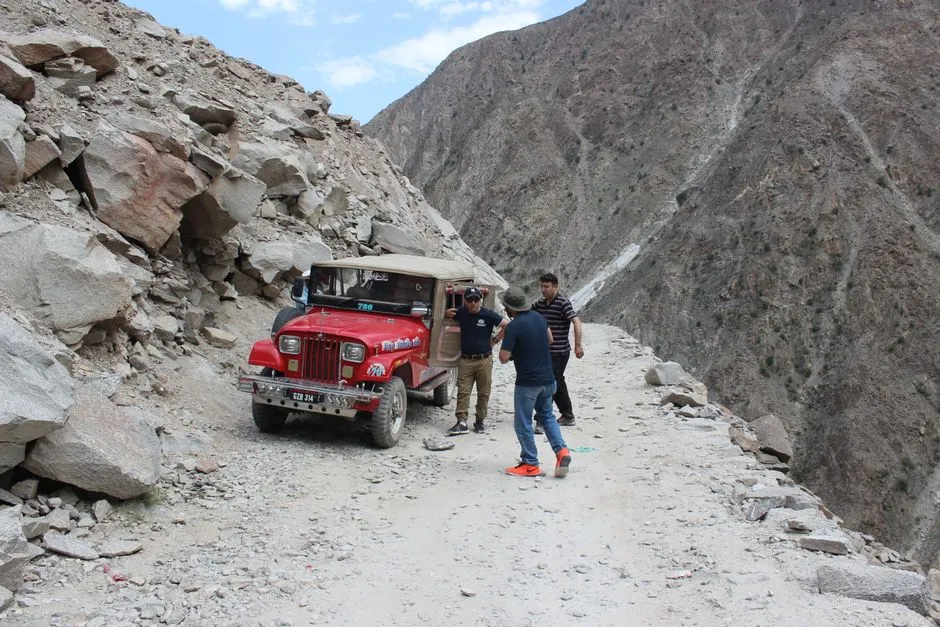
Turning around is a driving skill
Decide your retreat triggers before tires touch dirt. Good triggers include a closure, worsening weather, fading daylight, lost communications, a mechanical warning, driver fatigue, passenger distress, uncertain navigation, inadequate fuel or charge reserve, repeated loss of traction, and any obstacle beyond the vehicle, equipment, or group's practiced ability.
NPS Mojave safety guidance explicitly warns against overestimating a vehicle and says to turn around when a road becomes too rough. That is not timid advice. It is how a pleasant morning avoids becoming an expensive overnight documentary.
Stop before commitment removes choices
Approach uncertain terrain slowly enough to stop on stable ground with room to reverse. Inspect from a safe legal position. Consider surface, slope, side tilt, ledges, water, overhead and side clearance, underbody geometry, vehicle traffic, the exit, and what happens if forward motion stops halfway.
If you cannot see or verify the bottom, line, far side, or safe recovery direction, do not enter. Water crossings deserve an especially low threshold because depth, current, debris, and erosion can change rapidly.
Use the least capable element
The limit belongs to the least experienced driver, least capable vehicle, weakest communication link, smallest remaining reserve, or most vulnerable passenger—not the boldest person holding a radio. A convoy crosses together or retreats together unless a safe, preplanned alternative exists.
Fatigue matters. If a line requires precision that the driver no longer has, the terrain has effectively become harder even though the rocks have not moved.
Watch for accumulating warnings
One small issue may be manageable; several create a shrinking safety margin. Rising temperature, a slow tire leak, damaged protection, intermittent warning lights, navigation uncertainty, rain upstream, another vehicle stuck ahead, and sunset approaching are not unrelated plot twists. Add them.
Pause in a safe place and ask: Can the group return by the same route? Does the obstacle block emergency access? Is recovery possible with identified points and compatible rated equipment? Could a second failure strand everyone? What condition is expected an hour from now?
Never let sunk cost drive
Distance already traveled does not make the next obstacle safer. Neither does a long drive to the trailhead, an audience, a reservation, or a camera. “We came this far” is an account of the past, not evidence about the next ten metres.
Do not let another group's successful crossing substitute for your own assessment. Their vehicle, tires, load, line, skill, and timing differ.
Retreat deliberately
Choose a legal stable turnaround rather than making a multi-point turn near an edge. If reversing is necessary, use one trained spotter visible to the driver, agree on signals, stop when contact is lost, and keep everyone else clear. Never place a spotter downhill, behind a rolling vehicle, or between it and an obstacle.
If the vehicle cannot retreat safely, stop and build a controlled recovery plan. Call qualified recovery or emergency services when people are threatened, the vehicle is unstable or damaged, moving water is involved, or the system cannot be verified.
Make retreat part of the original plan
The first-trail preparation guide includes turnaround points, time limits, reserves, alternate exits, and a filed return plan. Discuss those limits while everyone is warm and unembarrassed.
Turning around preserves the vehicle, the route, and tomorrow's choices. A trail does not award partial credit for getting stuck impressively close to the summit.