How to Plan a 4x4 Recovery Before Getting Stuck
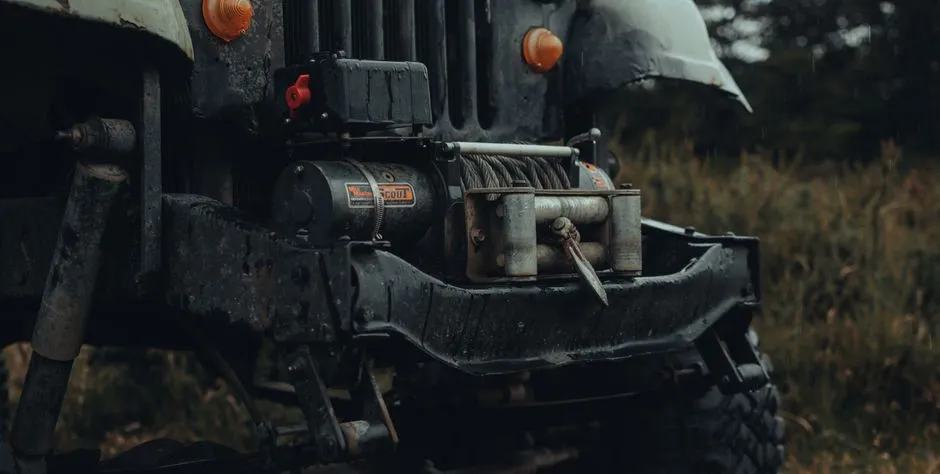
Plan recovery while the vehicle is still moving
Before entering an obstacle, identify stable stopping areas, legal retreat, likely failure direction, and whether recovery could be performed without people, vehicles, or gear entering a slope, traffic lane, watercourse, fire risk, or rollover path. If no controlled recovery is available, the obstacle is a turnaround point.
Inventory exact vehicle recovery points and read their manual limitations. Inspect every rope, strap, shackle, connector, winch component, board, damper, glove, and controller according to its maker's instructions. Ratings must form a documented compatible system; a strong-looking mystery hook is still a mystery.
Stop and stabilize first
When stuck, stop wheelspin and secure the vehicle as its manual directs. Account for occupants, traffic, smoke, leaking fluids, rising water, unstable ground, overhead hazards, battery damage, and weather exposure. For immediate threats to life, contact emergency services.
Do not crawl beneath an unsupported vehicle or stand downhill, downstream, between vehicles, beside a tensioned line, or in a possible rollover or rollback path. Move unnecessary people well away.
Diagnose the actual resistance
Determine whether tires lack traction, the chassis is high-centered, a wheel is blocked, the vehicle is bellied in mud or snow, brakes or driveline are damaged, or the route ahead is simply impassable. A method that solves traction may overload hardware when the underbody is anchored.
Clear loose material only where legal and safe, without undermining the vehicle or damaging the route. Never use hands or feet near a wheel that may rotate.
Choose the lowest-energy workable method
Start with controlled options such as unloading only when safe, improving the legal line, or using recovery boards exactly as directed. Escalate only when the vehicle, terrain, attachment points, equipment ratings, and operators support the next method.
A kinetic pull, static pull, and winch recovery load components differently. Read kinetic rope versus static strap before assuming one can substitute for another. Never join equipment with an improvised metal object.
Verify both ends and everything between
Use only points the vehicle manufacturer or qualified system maker identifies for the intended recovery direction. Recovery points and transport or tow points are not automatically interchangeable. Never recover from a tow ball, tie-down point of unknown purpose, suspension component, axle, or bumper without documented approval.
Check alignment, edge protection, closed connections, line condition, loads, and vehicle mass against every component's instructions. If any identification, rating, compatibility, or load path is uncertain, stop.
Create a command and exclusion plan
One competent person directs the recovery. Agree on hand or radio signals, the driver actions, maximum planned movement, stop command, and what happens if communication fails. Everyone can call stop; only the director restarts.
Place bystanders outside all possible line, hardware, wheel, vehicle, slope, and debris paths—not merely a convenient number of steps away. Stored energy does not respect folding chairs.
Reassess after every movement
Stop frequently, secure vehicles, and inspect points, gear, alignment, tires, ground, and new damage. Abandon the attempt for shifting anchors, frayed or heated gear, bending hardware, unstable vehicles, worsening weather, repeated failure, or any person entering danger.
Qualified professional recovery is the correct choice when manuals are unavailable, points cannot be verified, damage or rollover is involved, water is moving, the vehicle is heavily embedded, or the crew lacks training. A recovery plan succeeds when everyone goes home; the vehicle's immediate opinion is secondary.