How to Choose a Line on a Rocky Trail
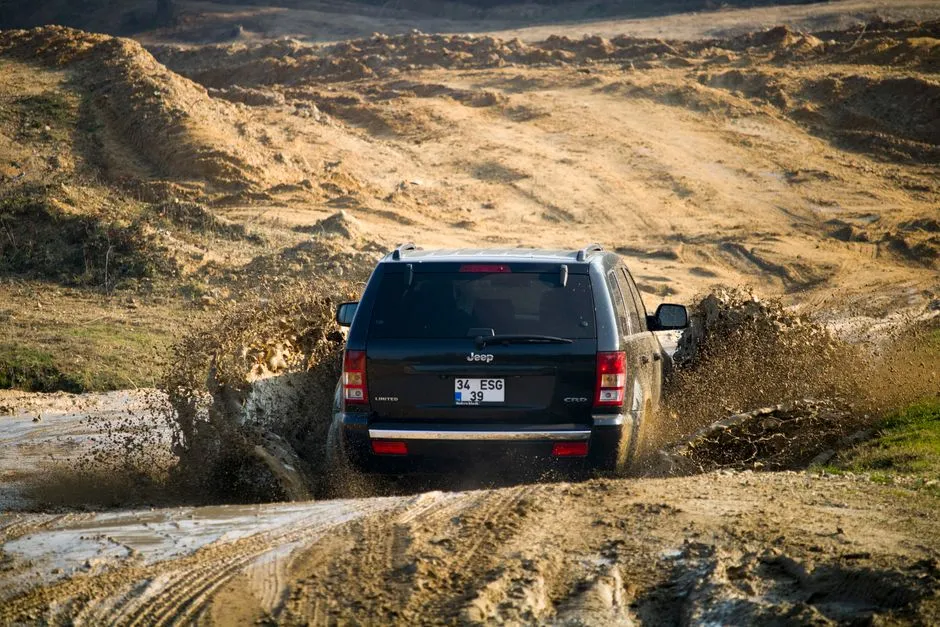
A trail line is a slow path for all four tires
Choosing a line means predicting tire placement, clearance, body roll, traction, steering, and a safe reverse path across the entire obstacle. Stop before the rocks, keep the vehicle on the legal designated route, and inspect on foot only from stable ground outside travel and rollover paths. One trained spotter directs the vehicle; every other enthusiastic arm belongs in retirement.
Walk the obstacle safely
Look for loose or shifting rocks, holes, ledges, undercuts, side slope, sharp edges, runoff, overhead branches, and underbody threats. Identify the high side, low side, likely tire contact patches, and where the vehicle could slide.
Do not climb unstable rocks or stand downhill. If inspection itself is unsafe, the obstacle has already answered.
Map all four tires
Drivers naturally watch the front tire and forget the rear follows a different arc. Mark visual references on the hood or trail only without moving natural material unlawfully. Consider wheelbase and steering sweep.
Use approach, departure, and breakover geometry to identify bumper and belly risks.
Keep tires on stable high points
Where appropriate, placing tires on stable rocks can preserve differential and underbody clearance. But a rock that rolls, crumbles, or has a sharp sidewall edge is not a platform. Do not stack rocks or build bypasses unless the land manager explicitly permits trail work.
Stay centered enough that tire sidewalls do not rub edges and wheels do not drop unexpectedly into holes.
Manage body roll
Diagonal articulation can lift one corner and lean the body. Watch roof, mirrors, doors, cargo, and banks. Side slopes can increase rollover risk, especially with roof load or suspension changes.
If a tire lifts unexpectedly, steering becomes light, or the body approaches an uncertain limit, stop. Reverse along the known line if safe; do not add throttle to negotiate with gravity.
Use a clear spotter protocol
Agree on hand signals or radio commands before movement: driver side, passenger side, straight, stop, reverse, and distance. The spotter stays visible to the driver and outside the vehicle's path, pinch zones, downhill slide zone, and tire-thrown debris.
If communication fails, stop. “I thought you meant the other left” is a poor recovery debrief.
Select controls before entering
Choose the manufacturer-approved range, gear, lockers, cameras, and traction settings while stopped safely. Use smooth throttle and very low speed. Avoid spinning tires; wheelspin can lose the line, damage tires and trail, and turn a small rock into a thrown object.
The steep-hill guide adds pitch-specific rules.
Protect the route
Do not drive around the obstacle onto vegetation or widen the trail. NPS responsible-riding guidance says to stay on designated routes and remain within skill and machine capability. If the legal line no longer fits, turn around.
Preserve the exit
Before the front tires enter, confirm where all four tires will finish and where the spotter moves. Keep enough space for another attempt or retreat. A line that requires increasing momentum halfway through was not fully planned.
Use the turn-around guide when the rock moves, weather changes, or clearance cannot be verified. The elegant line is not the one that looks brave. It is the one that leaves almost no story beyond, “We crawled through and nothing expensive touched geology.”